Tuesday, 10 January 2017

Literature Review of Hydrometallurgical Recycling of Printed Circuit Boards

: journal of recycling
This study provides an up-to-date review of recycling of printed circuit boards (PCBs), specifically in hydrometallurgical treatment. Waste printed circuit boards, which are rich in base and precious metals, are the essential component of end-of-life electrical and electronic equipment.

From the economic and environmental perspectives, the efficient recycling of PCBs is of importance. For the extraction of metals from PCBs, a large amount of work has been done to establish an environmentally friendly and economic way to recover metals from PCBs based on physical, pyrometallurgical and hydrometallurgical processes.

Among those processes, hydrometallurgy is a promising treatment due to its low capital cost, high selectivity and lower environmental impact. This review emphasizes the recycling of PCBs by physical and hydrometallurgical treatments.

Monday, 9 January 2017

Qualitative and Quantitative Analysis of Dan-Deng-Tong-Nao Capsules by HPLC-DAD-MS/MS

Dan-Deng-Tong-Nao capsules (DDTNCs), a traditional Chinese medicinal preparation consisting of Radix Salvia miltiorrhiza, Radix Pueraria lobata, Erigeron breviscapus, Rhizoma chuanxiong has been used for the treatment of apoplexy and the syndrome of apoplexy involving both collaterals and meridians caused by obstruction of collaterals by blood stasis in China.

Dan-Deng-Tong-Nao Capsules
In this paper, a HPLC-DAD-MS/MS method was successfully developed for qualitative and quantitative analysis of major components in DDTNCs for the first time. Twenty-six compounds were identified by comparison of their retention times and MS spectra with those elucidated standards or recorded literatures, and six of them (danshensu, 5-hydroxymethylfurfural, 3,4-dihydroxybenzaldehyde, epicatechin, puerarin and salvianolic acid A) were simultaneously determined by HPLC-DAD quantitatively.

The analytical method was fully validated and successfully applied for quantitative and fingerprint analysis of DDTNCs from fifteen different production batches, results indicated that the proposed approach was applicable for the routine analysis and quality control of DDTNCs

Friday, 6 January 2017

Metal Oxide Nano-particles as an Adsorbent for Removal of Heavy Metals

In this study, adsorption process performance was assessed using metal oxide nano particles for wastewater treatment containing heavy metals in a laboratory scale reactor. Copper oxide nano-particles were prepared and fully characterized considering their adsorption properties (surface area and pore size distribution) as well as their chemical structure and morphology.

Removal of Heavy Metals
The adsorption of heavy metals, including Fe3+ and Cd2+ was studied in batch experiments. Various physico-chemical parameters such as pH, initial metal ion concentration, and adsorbent dosage level and equilibrium contact time were studied.

The adsorption of Cd2+ and Fe3+ ions increased with an increase in pH. The optimum solution pH for adsorption of both metals from aqueous solutions was 6. Adsorption was rapid and occurred within the first 20 min for both metals within different solution concentrations (250, 100, 50 and 25 mg/L).

Thursday, 5 January 2017

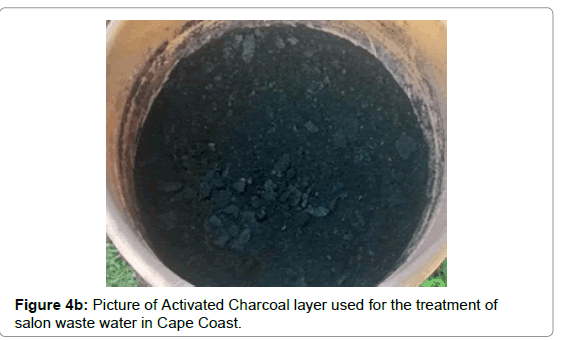
Using Slow Sand Filtration System with Activated Charcoal Layer to Treat Salon Waste Water

Discharge of untreated salon waste water into the surrounding environment in Ghana remains so probably because of poor knowledge of Ghanaians about treated waste water and its reuse as well as ignorance of waste water to ground water pollution. In Ghana, there is little or no knowledge on waste water treatment technology for salon waste water.

Slow Sand Filtration System
In addition, a greater proportion of Ghanaians have no knowledge regarding reusability potentials of treated waste water. Thus, this study assessed the efficiency of a simple slow sand filtration system integrated with activated charcoal layer for salon waste water treatment. The study also assessed the perception of some selected Ghanaians in Cape Coast on reuse of treated salon waste water.

For sixteen weeks, salon waste water collected from five different beauty salons in Amamoma was homogenized and treated. Selected parameters of both influent and effluent were analyzed. The percentage removals of some selected heavy metals present in the treated waste water (Effluent) show Copper 32.836 ± 7.013%, Cadmium 59.259 ± 8.006%, Zinc 83.333 ± 6.881%, Iron 38.095 ± 2.002%, Lead 100.000 ± 12.939% and Arsenic 100.000 ± 11.573%.

Wednesday, 4 January 2017

Lung Cancer and Nicotine

Lung cancer is the third most common cancer after prostate gland and breast cancer. A study has been reported 63,000 deaths per year in India due to the lung cancer. Although, there must be numerous of other factors behind the occurrence of lung cancer but most common of all is smoking and tobacco consumption.

Lung Cancer and Nicotine
Thankappan and thresia has reported that there has been 5 million deaths per year i.e., approximately one in ten adults in the world including 2.41 million deaths in developing countries and 2.43 million being attributed to developed countries occur only because of tobacco consumption.

Chewing or smoking tobacco and its products contains high amount of carcinogenic nicotine and its derivatives. Excessive inhaling of nicotine results in the alteration of signalling pathways responsible for proliferation, apoptosis and metastasis. Lung cancer culminates from the series of changes in the signalling pathways.

Tuesday, 3 January 2017

Thermodynamic Calculation of a Heat of First-Order Phase Transitions

A transition heat is the most important characteristics of first-order phase transitions. Black was first who discovered in 1762 that in the transfer of water to vapor, some quantity of heat is absorbed, which he termed the latent evaporation heat.

Thermodynamic Calculation of a Heat
In spite of more than the two-hundred-year period of the heat transfer concept existence there are no analytical expressions relating the transition heat with other parameters of phase transitions. For example, the fundamental "Physics Encyclopedia", articles devoted to the transition heat, evaporation heat, and so on, comprises no formulae but only tables of experimental data.

One can also mention monographs which have no relationships except for the conventional definition of the transition heat λ=TΔS. Hence, obtaining the relationships between the transition heat and other parameters of first-order phase transitions will be a substantial contribution into the theory of first-order phase transitions.

Monday, 2 January 2017

Remediating Free Chlorine from Aqueous Solution Using Hydrous Zirconium Oxide Impregnated Carbons

In this study, a commercially activated carbon was loaded with 10 and 25 wt% hydrous ZrO2 followed by heat treatment at 393K in an attempt to improve its adsorption capacity towards the removal of free chlorine from water.

Free Chlorine from Aqueous Solution
The tested carbons were characterized by SEM, N2-adsorption –desorption, iodine number, FTIR and pHPZC techniques. The effects of adsorbent dose, contact time, initial free chlorine concentration and pH on the removal performance of free chlorine from water were studied. Loading the original carbon with 10 and 25 wt% hydrous ZrO2 led to reduce its SBET area as well as its iodine number.

The same trend was also found for the measured values of pHPZC. The removal performance of free chlorine was found to increase with decrease the initial solution pH. The equilibrium data fit well the Langmuir isotherm. Loading with hydrous ZrO2 increased to a great extent the removal of free chlorine from water.