
Tuesday, 15 November 2016

Wednesday, 9 November 2016
Biosorption of Neodymium by Selected Photoautotrophic and Heterotrophic Species
Rare earth elements (REEs) consist of the lanthanides plus
yttrium and scandium. Global demand for REEs in 2015 was estimated to 210,000
tons. These elements are chemically very similar and randomly distributed in
nature. Hence, their production is difficult and challenging due to many
byproducts such as thorium, uranium, heavy metals and acidic waste waters.

Moreover, they can be found together in bulky rocks, so their separation is
sophisticated. The classical exploitation of REE sources currently pollutes
nature heavily. Due to that and the fact that around 97% of the worldwide needof REEs are provided by China, making REE-consuming industries excessively
dependent on rationing and the rising world market prizes, there is a great
interest in alternative and environmentally friendly methods for delivering these
elements. Read more...................
Monday, 7 November 2016
Prevention of Dust Hazards Affecting Workers in Hard Coal Mines
This paper presents the results of the tests conducted with
the ZWILKOP ZW-10 dust control preparation (Patent P. 394235) used in the air
and water sprinkler systems at mining facilities.
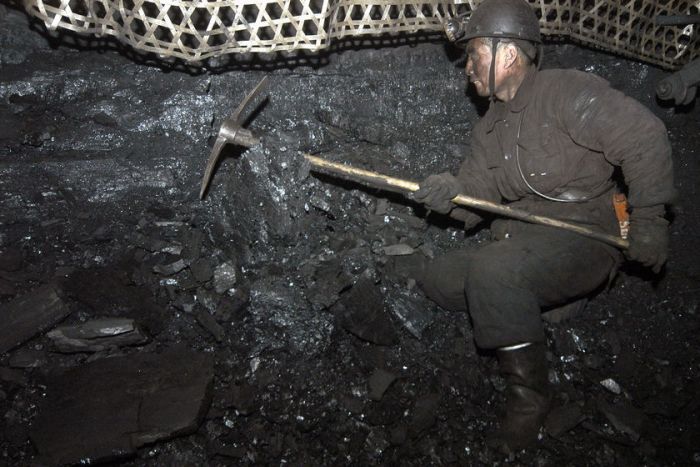
The tests aimed to assess the inhalation
exposure of the mining personnel to respirable/1 and inhalable2/dust fraction and to chemical
agents when using ZWILKOP ZW-10 (MSDS 2013) preparation.
This publication contains the results of the measurements
performed to evaluate concentrations of the hazardous chemical substances:
2-(2-butoxyethoxy)ethanol and 2-ethylhexan-1-ol, which are the components of
the ZWILKOP ZW-10 preparation, and respirable1/ and inhalable2/ dust fractions
at mining personnel workstations.
Saturday, 5 November 2016
Foundations of Chemical Kinetic Modeling, Reaction Models and Reactor Scale-Up
Even today, unfortunately, the industrial professional
performing the design of a chemical reactor may not have the practical
experience in Mathematics as well as Quantum Mechanics or Physical Chemistry to
fully understand the implications of the mathematical formulism.

This is especially
true of the mathematical methods used in Quantum Chemistry as well as
quantum mechanics applications to the estimate of rates of chemical reactions.
Another important consideration that may be difficult during
the composition of reaction models is the generation of elementary chemical
reactions to explain the formation of products and most important trace
components some of which may be of concern due to pollution of the environment.
Friday, 4 November 2016
A New Optical Sensor for Selective Monitoring of Nickel Ion Based on A Hydrazone Derivative Immobilized on the Triacetyl Cellulose Membrane
A new highly selective optical sensor was prepared by
de-esterification of triacetyl cellulose
transparent film and chemical immobilization of 1-acenaphthoquinone
1-thiosemicarbazone (L) on it.

The absorbance variation of immobilized 1-acenaphthoquinone
1-thiosemicarbazone on hydrolyzed cellulose acetate film of upon addition of
1.5 × 10⁻⁵ mol L-1 aqueous solutions of Zn2+, Pb2+, K+, Cu2+, Ag+, Ni2 , Cd2+,
Ca2+, CrO4 2-, Hg2+, Co2+, Mn2+, Cr3+, S2 O3 2-, Mg2+, Na+, Al3+, Tl+ and Fe3+
indicated a substantiality much larger variation for the Nickel ion in compare
to other studied ions.
Consequently, the new hydrazone derivative L possesses a high
selectivity towards this metal ion. Influences of various experimental
parameters on Ni2+ sensing, including the reaction time, the solution pH and
the concentration of reagents were studied.
Thursday, 3 November 2016
Advances and Changes in the Techniques of Multi- Dimensional and Comprehensive Chromatography and When Coupled with Mass Spectrometry
This review covers the principles of two dimensional gas and
liquid chromatography (2DGC and 2DLC) and briefly introduces the theory
accounting for the increase in separation resulting from a greater
peak capacity than
for the one dimensional (1D) mode.

The advance in the techniques from multi-dimensional to
comprehensive chromatography is discussed. The more recent development of
multi-dimensional chromatography ion mobility mass spectrometry receives a
mention to highlight the added dimension of molecular size and shape (molecular
collision cross section) as an enabling tool for increasing component
separation and peak capacity.
Although both the techniques of 2DGC and LC are described the
focus is on the environmental and food applications of 2DGC, principally when
coupled to mass spectrometry, with TOFMS and HRMS as prime examples.
Wednesday, 2 November 2016
Nanotechnology in Preparation of Semipermeable Polymers
Chemical engineering as a branch of engineering applies
physical, chemical and life sciences with applied mathematics and economics to
design large-scale processes for converting raw materials into useful forms and
products. Advancement in chemical engineering helps in optimizing the
industrial outputs.

Chemical Engineering Journal is an open access
international peer reviewed publication that publishes recent advances on these
topics. Seven research articles and a review article have been published in volume 6 issue 2 of the journal. Ahamed et al. in their research article
described the synthesis of aminoguanidyl-chitosan imprinted polymers (AGCIPs)
for the recovery of precious metals like gold and silver from aqueous solutions.
The author found that AGCIPs are effective in absorbing gold and silver from
the solutions and also the polymer can be regenerated for reusing up to five
times without change in the adsorption capacity.
Subscribe to:
Posts (Atom)